Home of Wis-Myth. Just left of Sci-Fi looms Wisdom-Focused Modern Mythology

Click on hand to order novels
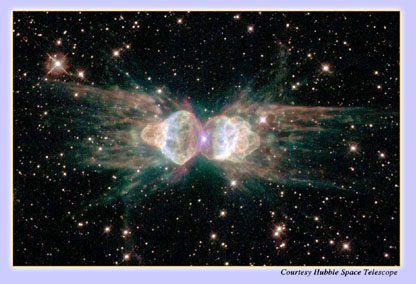
Parallel Existences
3/4/2013 update: This segment from P. D. Ouspensky's A New Model of the Universe (p. 404, 2nd American Edition, Alfred A. Knopf, New York, 1946) keeps coming back to resonate, so we are including it to begin the exchange below concerning parallel existences.
"This closed curve of the fourth dimension, or the circle of time, is the life or existence of every separate object, of every separate system, which is examined in time. But the circle of time does not break up or disappear. It continues to exist, and joining other, previously formed circles, it passes into eternity. Eternity is the infinite repetition of the completed circle of life, an infinite repetition of existence. Eternity is incommensurable with time. Eternity is infinity for time.
"Quanta of light are precisely such circles of eternity.
"The third dimension of time (the sixth dimension of space) is the stretching out of these eternal circles into a spiral or a cylinder with a screw-thread in which each circle is locked in itself (and motion along it is eternal) and simultaneously passes into another circle which is also eternal, and so on."
Parallel Existences – A Few Questions from Bob
How many levels of apparent existence go on at the same time? Are there sentient beings existing here – from Utopian golden-age lifestyles to the most hell-like apparencies – all at once? If so, is it all based on the belief scenarios of the apparent beings involved?
Since the great mystics and philosophers all say this “life” is just another dream state, how many co-exist in an illusion of a now? If the closest mental description of real beingness (true nature) is empty (selfless) awareness (non-dual awareness), what is there to actively create any apparent existence scenario or change a reality?
Since true nature is not the “observer” or what is “observed,” there seems to be no “is” at all. The Tao that can be conceived or grasped or defined is of course more illusion. (An interesting conundrum, wouldn’t you say?)
Ouspensky said we were here to build a vehicle. Gurdjieff said we were here to create a soul – to transfer our “me” into essence or true nature, to become immortal. This has also been expressed “to become a conscious cell or atom in the mind of God.” Yet God is just another concept.
Parallel Existences – A Few Comments from Lily
Yes, God is just another concept. In exploring a range of sources, some channeled and some inspired, other terms are used for the same concept; i.e., Superconsciousness, the Great Central Sun, Everness, the One Point, and the Void of Eternal Light. It seems helpful to consider all these terms interchangeably because humankind has personified the God concept throughout the ages. Perhaps God personified has slowed spiritual evolution and confined higher understanding to arcane wisdom schools and to mystical experience.
The direction of your questions, in leading to the God concept, brings nirvana to mind. The word itself has been commonly misunderstood in the West. For clarity when using the term, it helps to refer to The Shambhala Dictionary of Buddhism and Zen (1991, Shambhala Publications, Inc., p. 159):
“The goal of spiritual practice in all branches of Buddhism. In the understanding of early Buddhism, it is departure from the cycle of rebirths (samsara) and entry into an entirely different mode of existence. It requires complete overcoming of the three unwholesome roots – desire, hatred, and delusion (akushala) – and the coming to rest of active volition (samskara). It means freedom from the determining effect of karma. Nirvana is unconditioned (asamskrita); its characteristic marks are absence of arising, subsisting, changing, and passing away….In many texts, to explain what is described as nirvana, the simile of extinguishing a flame is used. The fire that goes out does not pass away, but merely becomes invisible by passing into space (akasha); thus the term nirvana does not indicate annihilation but rather entry into another mode of existence. The fire comes forth from space and returns back to it; thus nirvana is a spiritual event that takes place in time but is also, in an unmanifest and imperishable sphere, always already there. This is the ‘abode of immortality,’ which is not spatially localizable, but is rather transcendent, supramundane (lokottara), and only accessible to mystical experience.” *
Could it be that what humankind has come to call “God” is, then, so esoteric and mystical that Sakyamuni Buddha would not refer to God, just as, according to another paragraph of the above reference, “the Buddha declined to make any statement concerning the nature of nirvana” to avoid having his followers conceptualize either term? Could it be said in response to some Western criticisms of Buddhist dharma being godless that the opposite is true in the highest realms beyond language and concept?
Further, could it be that parallel existences are expressions of numerous phenomenal manifestations of the oversoul or overself, lifetimes simultaneously playing in space-time continuum – that each existence, illusory though it may be, seeks and works and interrelates with the other existences in sometimes subtle and sometimes profound relationships until reunification comes about, when illusion is left behind?
*From The Shambhala Dictionary of Buddhism and Zen, (c) 1991 by Shambhala Publications, Inc. By arrangement with Shambhala Publications, Inc., Boston, www.shambhala.com
Parallel Existences – A Few Questions or Comments from You?
We invite you to continue the discussion of parallel existences, worlds, and universes. We’re especially interested about this broad topic within the context of Buddha Dharma, but do not consider this forum limited in any sense. We welcome your feedback and contributions, which you can offer through "Contact us" at upper left. Please be sure to reference the page to which you want to contribute, and give your permission in that writing.
All images and written/spoken material are protected under copyright by Blooming Rose Press. No material may be reproduced without written permission.
Click on "Contact us" for permission.